

Commercial Alarm Installers and Intrusion Detection Contractors in Berks County
KIT Communications is a commercial alarm installer, intrusion detection contractor, and security systems integrator serving Reading and Berks County from our Lebanon headquarters. As a Pennsylvania low voltage contractor in business since 1999, KIT designs and installs commercial alarm systems and intrusion detection — sensors, zone partitioning, and monitored response — for the plants, stores, schools, and offices that make up the Berks County economy.
KIT designs, installs, services, and inspects the alarm system. For the full technical detail on platforms, sensor types, and monitoring, see KIT’s statewide commercial alarm overview. KIT covers commercial security across central and eastern Pennsylvania.
Off-Shift Alarm Protection for Berks County Manufacturers

KIT installs commercial alarm systems and intrusion detection for Berks County manufacturers — food processing, plastics and packaging, and metal fabrication plants from Wyomissing east to Boyertown and around Birdsboro. The detection protects the raw stock, tooling, and finished goods left on the floor through every off shift, sized to how the plant runs when the last shift clocks out.
As a Berks County intrusion detection installer, KIT builds the detection around the floor plan: restricted-area sensors around tooling cribs, parts storage, and high-value material; perimeter contacts on shipping and receiving doors; motion coverage tuned to off-shift production areas; and holdup or duress devices at supervisor and cash-handling positions.
Retail, Commercial & Small-Business Burglar Alarms
KIT installs commercial burglar alarm systems for the stores, multi-tenant buildings, and small-to-mid commercial sites across Reading’s commercial core, the retail corridor around Wyomissing, and the boroughs out to Boyertown: door and window contacts, glass-break and motion sensors, holdup and duress devices for front-counter staff, and partitioned arming for buildings where a back office, a sales floor, and a stockroom each close on their own schedule.
For multi-site retail and commercial operators, the same alarm systems report into multi-site central-station monitoring, so every location is armed, disarmed, and watched on one account, and a building that only needs alarm gets installed and monitored as alarm-only.
School, College & Municipal Intrusion Detection
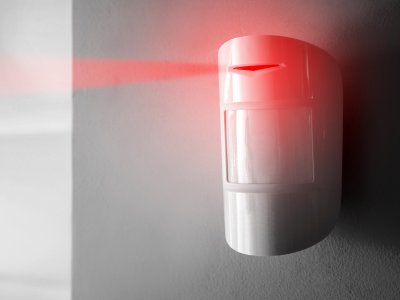
KIT installs monitored alarm systems and after-hours intrusion protection for Berks County’s schools, colleges, and municipal buildings — K-12 and charter school buildings from Shillington east to Fleetwood, the college campuses in Reading, and township and municipal facilities — door and window contacts, glass-break and motion sensors, holdup and duress devices for front-office staff, and partitioned arming for buildings with mixed after-hours use.
School and municipal alarm deployments often run alongside door access control and video surveillance on the same campus, and the alarm can integrate with those systems where the platforms support it. For Berks County public buyers, COSTARS, PEPPM, and TIPS cooperative purchasing simplifies procurement.
Camera-Verified Central-Station Monitoring
KIT’s central-station monitoring partner holds the industry’s top tier — UL-listed, FM-approved, and TMA Five Diamond Certified, a level fewer than 3% of monitoring companies reach. Across Berks County’s plants and storefronts, camera-verified monitoring matters most where buildings sit empty after hours: when a sensor trips, the station pulls the linked camera feed and confirms a real intrusion before police roll. KIT installs, services, and inspects the system and carries the monitoring over when a facility switches from a prior provider.
Berks County Coverage
Coverage runs across Berks County — Reading’s commercial core, the manufacturing borough belt around Wyomissing and Sinking Spring, the school districts out toward Fleetwood, and north through Hamburg to Kutztown. The full list of Berks County communities served is in the FAQ below.
Start an Alarm Project in Berks County
KIT Communications installs commercial alarm and intrusion detection systems across Reading and Berks County. Contact KIT Sales for a site survey and a written proposal.
Why Berks County Buyers Choose KIT for Alarm Systems
Intrusion design in-house before installation. KIT plans sensor coverage, zone partitioning, and the monitoring approach in-house — sized to the building — before devices get ordered.
Advisory stance, not platform-pushing. KIT installs both cloud-managed alarm platforms and on-premise intrusion panels and advises on the tradeoffs; the client drives the platform decision.
Closeout walk with the customer. KIT runs a closeout walk so the customer sees the alarm system functioning before handover.
Repeat work is the norm. KIT has delivered more than 300 projects in the Reading area over 25+ years, and 3,400+ commercial projects statewide since 2020 — more than five projects per client on average. The Estimator and Project Manager who scope your alarm project are the same people on the next one. SBA-Certified SDVOSB.
Frequently Asked Questions
Yes. Berks County keeps a deep manufacturing base — food processing, plastics and packaging, and metal fabrication — and a plant that runs partial shifts or shuts down overnight has hours every day when the building is dark. KIT builds intrusion detection around the floor plan: restricted-area sensors around tooling and high-value material, perimeter contacts on shipping and receiving doors, motion coverage for off-shift production areas, and holdup or duress devices at supervisor positions. Monitoring is provided through a TMA Five Diamond Certified central-station partner.
Yes. KIT installs monitored burglar alarm systems for retail, multi-tenant, and small-to-mid commercial sites across Reading’s commercial core and from Wyomissing east to Boyertown — door and window contacts, glass-break and motion sensors, holdup and duress devices for front-counter staff, and partitioned arming for buildings with mixed after-hours use. For multi-site operators, the same systems report into multi-site central-station monitoring.
Central-station monitoring is provided through a UL-listed, FM-approved, TMA Five Diamond Certified partner — the highest certification level awarded by The Monitoring Association, held by fewer than 3% of monitoring companies. For facilities with integrated cameras, the station can verify an alarm visually before dispatch. KIT designs, installs, services, and inspects the alarm system and handles monitoring transitions from a prior provider.
Reading, Wyomissing, West Reading, Shillington, Sinking Spring, and Wernersville around the city, and the surrounding Berks County communities — Mohnton, Birdsboro, Boyertown, Douglassville, Fleetwood, Kutztown, Hamburg, Leesport, Morgantown, Womelsdorf, and Robesonia. Berks County is served from KIT’s Lebanon headquarters.
Yes. KIT holds COSTARS, PEPPM, and TIPS cooperative purchasing agreements, which simplify alarm and intrusion-detection procurement for Berks County school districts, charter schools, townships, and municipal buyers.